
OEM Touch Screen Sizes Supported
3.5” to 21.5”
Touch screen and display integrations for OEM applications.
 PCAP Touch
Screens
 Resistive Touch
Screens
 Optical
Bonding
 Air
AirBonding
 LCD
LCDIntegration

Touch screen and display integrations for OEM applications.
PCAP TouchResistive TouchOpticalAirLCDMany touch screen issues do not originate from the display itself. Failures often happen because environmental conditions, optical performance, controller integration, or mechanical design considerations were overlooked early in development.
Outdoor and high-brightness applications often struggle with readability due to insufficient LCD brightness, reflections, improper optical bonding strategies, or incorrect anti-glare surface treatments.
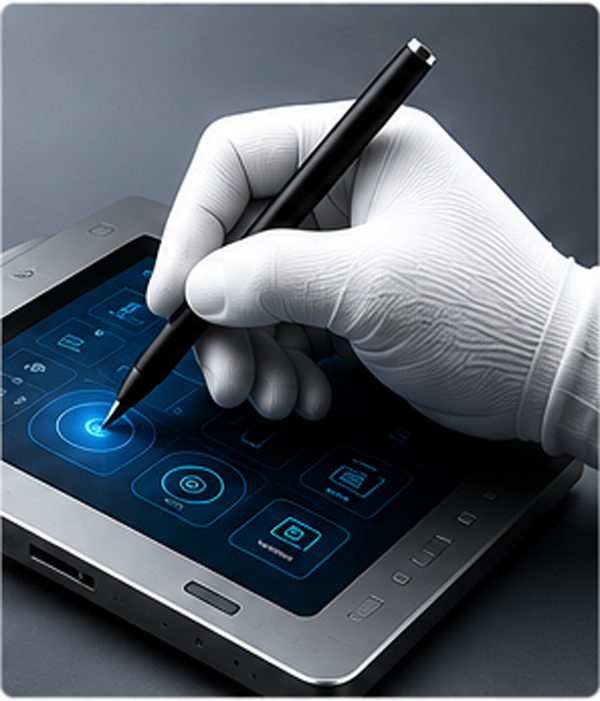
Glove compatibility depends on touch technology selection, controller tuning, glove material, and environmental conditions. Certain PCAP systems can support both thin and thick glove operation when properly engineered.
Electrical interference from nearby components, grounding strategies, or system architecture can impact touch accuracy and responsiveness.
Different applications require different touch technologies depending on environment, user interaction, durability requirements, and display performance expectations.

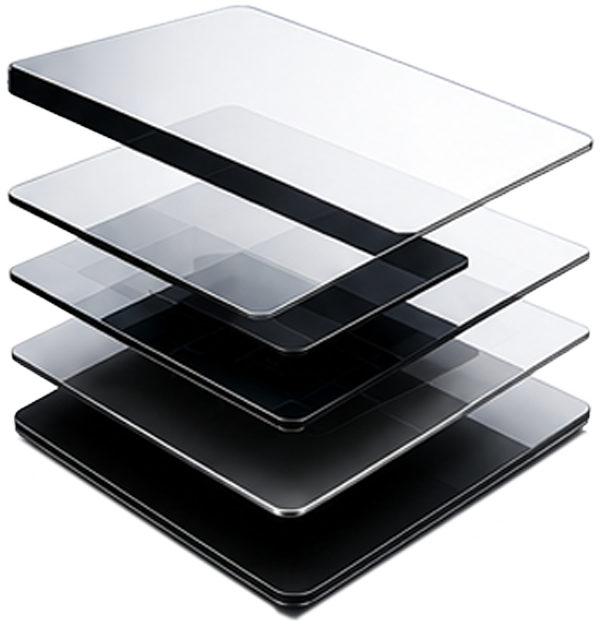

Glass thickness, coatings, surface treatments, and durability requirements impact both performance and user experience.

Controller selection affects touch sensitivity, latency, water rejection, glove support, and overall system responsiveness.

Electrical protection strategies help maintain long-term interface stability in demanding environments.

Brightness, viewing angle, optical bonding, and anti-glare treatments all influence usability in real-world conditions.

Housing pressure, gasket compression, mounting methods, and stack tolerances all impact reliability.

Temperature, moisture, UV exposure, chemicals, and cleaning agents should all be considered during design.
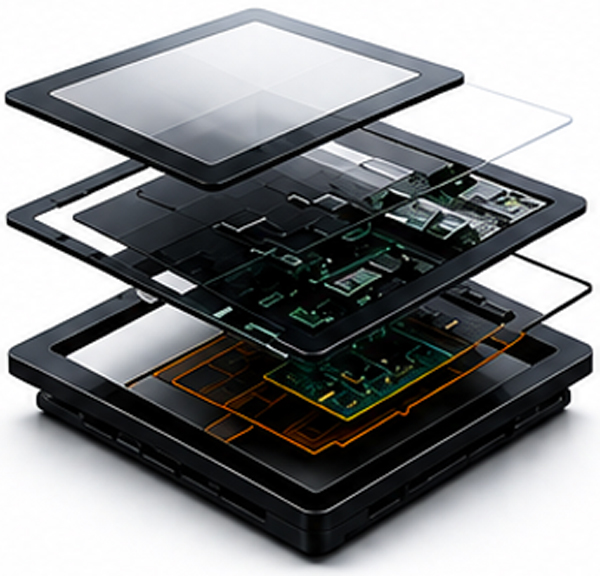
Modern interfaces often require more than standalone touch functionality.
Printec supports integrated HMI solutions combining touch screens, displays, membrane switches, graphics, lighting, controllers, and sub-assemblies into complete interface systems.


Built to meet your unique application requirements.
Touch, display, graphics, lighting and more.

Strong partnership for quality and scalability.

From concept and samples to full-scale manufacturing.
Improve readability, durability and performance.
Complete systems delivered ready for integration.
Commitment to quality, consistency and reliability.
Reliable touch screen performance depends on more than the display itself. Controller integration, optical performance, environmental exposure, and mechanical design all play a critical role in the final user experience.
Optical bonding uses optically clear adhesive (OCA) to eliminate the air gap between the touch screen and display, helping improve contrast, reduce reflections, enhance outdoor visibility, and improve overall durability. Air bonding maintains a small air gap between layers and can provide a more cost-effective solution depending on the application requirements.
Yes. Certain projected capacitive (PCAP) touch screens can support both thin and thick glove operation depending on controller tuning, glove material, environmental conditions, and overall system design considerations.
Printec supports custom touch screen and display integrations ranging from 3.5” to 21.5” for OEM applications across medical, industrial, fitness, appliance, and commercial markets.
Printec supports a range of custom touch technologies including projected capacitive (PCAP), resistive touch screens, optical bonded displays, and integrated touch display assemblies for OEM applications.
Printec supports a range of custom touch technologies including projected capacitive (PCAP), resistive touch screens, optical bonded displays, and integrated touch display assemblies for OEM applications.
Projected capacitive touch screens support multi-touch gestures, sleek glass surfaces, and modern user interfaces, while resistive touch screens are commonly used in industrial environments where glove operation, stylus input, or lower-cost systems are important.
Yes. Certain projected capacitive touch screens can be tuned for glove operation depending on glove material, thickness, controller selection, and application requirements. Resistive touch screens are also commonly used for glove-friendly environments.
Optical bonding is the process of eliminating the air gap between the touch sensor and display using optically clear adhesive (OCA). This helps improve contrast, reduce reflections, enhance outdoor visibility, and improve long-term durability.
Yes. Outdoor applications often require considerations such as brightness, UV exposure, moisture resistance, anti-glare treatments, optical bonding, and environmental durability. Printec supports touch screen solutions designed for demanding indoor and outdoor environments.
Temperature, moisture, chemicals, UV exposure, electrical noise, and mechanical stress can all impact touch responsiveness and long-term reliability. Early engineering consideration helps reduce these risks during development.
Yes. Printec supports integrated HMI solutions that combine touch screens with LCDs, OLED displays, membrane switches, graphics, controllers, flex circuits, backlighting, and sub-assemblies.
×
Share a few details about your touch screen application and we’ll follow up.


